






FAQs for Universities
How does it work?
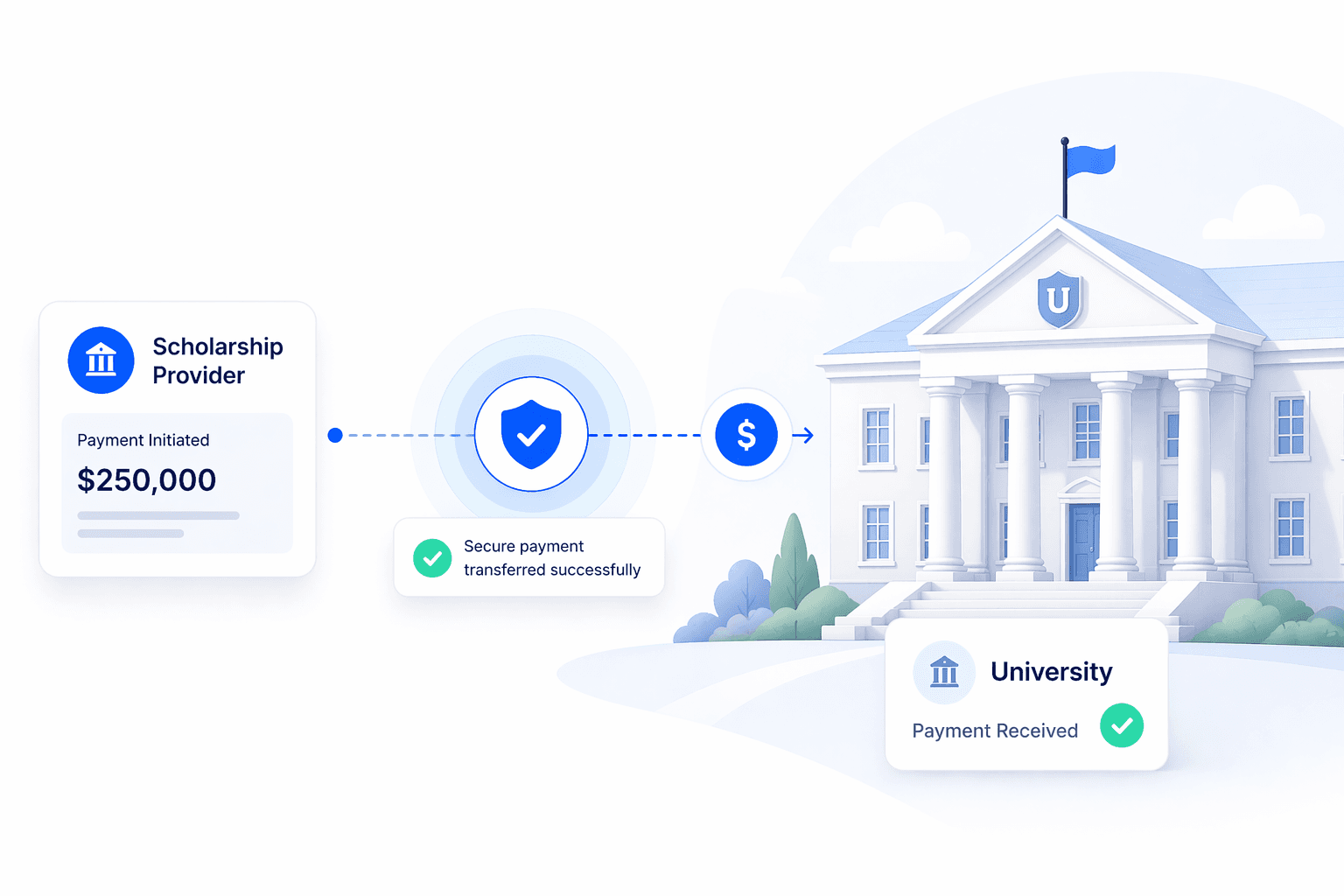
1. Provider initiates a payment to your university through the Backpack platform. Backpack facilitates the payment as a financial technology platform, not as a bank. Banking services are provided by OMB Bank, Member FDIC. 2. Upon initiation, a remittance email is triggered to your designated university contact emails - providing you a complete student roster to make reconciliation simple 3. Funds move from the provider’s account held by Backpack's sponsor bank to the university’s designated bank account via ACH. Backpack does not hold or control customer funds. 4. Funds typically appear in your university bank account in 1-3 business days from receipt of the remittance email
How will I receive payment?
Via ACH directly to your institution's bank account on file with Backpack. There are no paper checks.
How will I be notified?
When a scholarship provider initiates a payment, you'll receive an automated email from scholarships@backpackpay.com to the bursar and/or financial aid contacts on file with a link to the remittance details, including a downloadable CSV with the full breakdown of scholarships and award details included in that disbursement. This notification will arrive prior to the funds landing in your account.
When will the payment land?
Funds typically arrive within 1–3 business days of receiving your payment notification email.
Will I receive bulk payments or individual payments per student?
Payments are batched when multiple scholarships are going to the same institution — a single ACH deposit can cover multiple scholarships, with the remittance file breaking it down to the student level. If there is only one scholarship for your institution, you will receive a single individual payment.
What is on the ACH description?
For single-student payments, the student ID will appear in the ACH description. For payments covering multiple students, the ACH description will include the Payment ID from your notification email, which is associated with the full remittance roster.
What is Backpack’s role?
Backpack is the banking and payments provider for the scholarship providers*. Each provider has a unique bank account with Backpack, just like they would at JP Morgan or Wells Fargo. Providers use Backpack’s purpose-built software that sits on top of their bank account to initiate scholarship payments to your university. Backpack operates a robust compliance program in coordination with its bank partner. OMB Bank is subject to regulatory oversight, including examination by the FDIC.
Are funds ever held by Backpack?
No. Funds move from the provider’s account held at OMB Bank to the university’s designated bank account via ACH. Backpack does not hold or control customer funds.
How do I update our bank details or change where remittance notifications are sent?
You can submit your information directly through our secure portal at https://scholarships.dashboard.backpack529.com/p/bank-info/input , or email us at scholarships@backpackpay.com. To protect your institution, all banking detail changes are subject to a verification process — a member of the Backpack team will contact you directly to confirm the request before any updates are made.
What happens if we do not activate digital delivery?
If your institution isn't set up for ACH with Backpack, scholarship providers using our platform won't be able to disburse funds to your students. Similar to VA education benefits and other forms of financial aid, scholarship foundations are increasingly switching to electronic delivery and eliminating paper checks which can cause delays in posting to student accounts. Please contact us at scholarships@backpackpay.com to get set up or for further instructions.
Is there a way to automate all outside scholarship payments from all providers?
Reach out to the Backpack team at scholarships@backpackpay.com to find out how.
*Backpack is a financial technology company, not a bank. Banking services are provided by OMB Bank, Member FDIC. Deposits in checking and savings accounts are held by OMB Bank and are eligible for FDIC insurance coverage. FDIC insurance covers the failure of an insured bank; pass-through insurance applies only if specific conditions are met. Fees, terms, and conditions may apply.